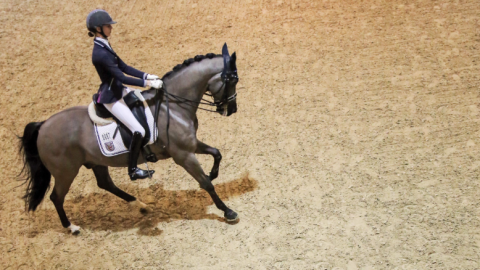


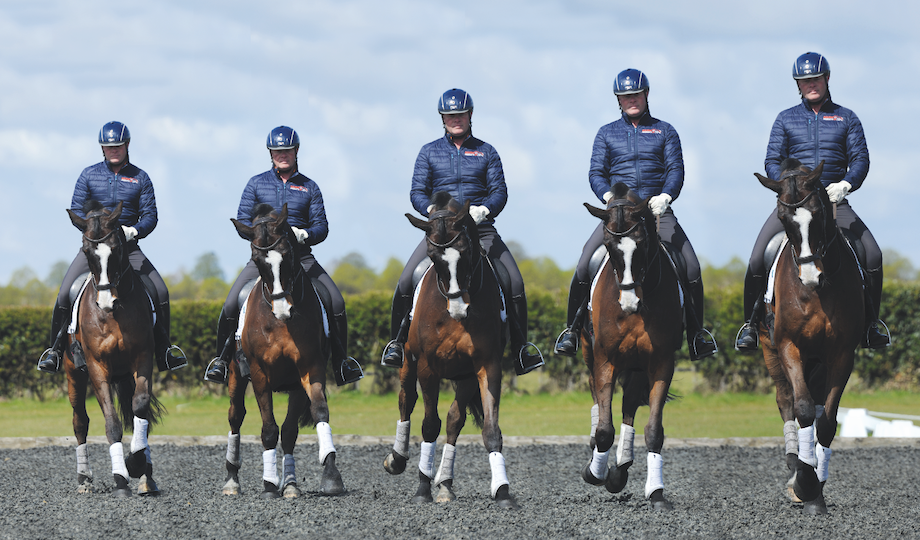
In dressage training, the beauty of a horse moving gracefully sideways — supple, balanced, and connected — is a reflection of true harmony between horse and rider. Among the most valuable exercises to develop this quality are the leg yield and the half pass. Though they may look similar to the untrained eye, each plays a distinct role in building a horse that moves laterally with freedom, elasticity, and understanding.
The Foundation: Leg Yield
The leg yield is one of the first lateral exercises introduced in a young horse’s training. Its purpose is not to impress the eye but to teach the horse to move away from the rider’s leg while maintaining rhythm, straightness, and relaxation.
In a correct leg yield, the horse moves forward and sideways on two tracks, with the body relatively straight and only a slight flexion at the poll away from the direction of travel. The key word here is obedience through suppleness — the horse learns to yield to pressure without tension.
This exercise helps to:
- Improve lateral suppleness and coordination.
- Develop contact and acceptance of the inside leg and outside rein.
- Encourage engagement of the hindquarters, as the inside hind leg steps under the center of gravity.
- Enhance the rider’s feel for balance and alignment.
When done correctly, leg yield becomes a gentle dialogue — the first language of lateral communication.
Building the Bridge: From Yielding to Carrying
Once the horse understands the leg yield, we can begin to refine the movement into something more complex — the half pass.
While the leg yield asks for lateral displacement, the half pass demands collection, balance, and bending.
Here, the horse moves forward and sideways with bend around the rider’s inside leg, showing flexion in the direction of movement. This requires the horse to carry more weight on the inside hind leg, creating strength and engagement.
The transition from leg yield to half pass can be seen as a journey from yielding to carrying:
- In the leg yield, the horse learns to give.
- In the half pass, the horse learns to collect and carry.
How the Combination Improves Lateral Suppleness
Working alternately between leg yield and half pass is one of the most effective ways to develop lateral elasticity and true throughness.
For example:
- Start on the diagonal with a few steps of leg yield, then smoothly change to a half pass.
- On the long side, alternate a few strides of leg yield away from the wall, then return with half pass toward it.
This interplay teaches the horse to stay loose through the ribcage, light in the shoulders, and responsive to the leg aids. It helps eliminate stiffness on one side and prevents the horse from becoming fixed or resistant in the bend.
Moreover, by practicing both exercises in sequence, the horse begins to swing more naturally through the back, developing that beautiful “side sway” — the controlled, elastic movement that gives the impression of dancing across the arena.
The Art Behind the Exercise
As with all dressage work, the quality lies not in the difficulty of the movement, but in the purity of the basics.
A rider with good feel uses the leg yield to keep the horse supple and listening; the half pass then transforms that suppleness into strength, expression, and collection.
When practiced patiently and with feel, these exercises build the foundation for advanced movements like the pirouette and the zig-zag half passes — and, more importantly, they create a horse that is physically balanced and mentally willing.
In essence:
The leg yield teaches the horse to yield to the aids.
The half pass teaches the horse to carry himself proudly under them.
Together, they build a language of lateral grace — the poetry of dressage.