

Buying a dressage horse is always an important decision. When that horse needs to be exported outside Europe, the process requires even more precision, planning, and expert coordination.
At Gallery Horse, we regularly support international clients from Asia, the Middle East, and the Americas, managing the entire export process to ensure the horse travels safely, legally, and with maximum attention to welfare.
Here is a clear overview of how the process works, step by step.
Sale confirmation and destination planning
Once the purchase is confirmed, the first and most important step is to clearly define the destination country.
Each non-European country has its own:
- Veterinary and health requirements
- Mandatory tests
- Quarantine regulations
- Administrative procedures
From this moment on, the entire export timeline is planned backwards to ensure that all deadlines are met without risk.
Veterinary examination and export-specific tests
In addition to the standard pre-purchase vet check, most countries outside Europe require additional health tests, such as:
- Specific blood tests
- Disease screenings depending on the destination country
- Official veterinary certification
All tests must be carried out within strict time windows, making professional coordination essential.
Official quarantine (when required)
Many countries require the horse to complete a pre-export quarantine at an approved facility.
During this period:
- The horse is monitored daily
- Veterinary controls are repeated
- The horse’s health and condition are closely supervised
The duration of the quarantine depends on the destination country and the horse’s health status.
Export documentation and certificates
Documentation is one of the most sensitive parts of the export process. Exporting a horse outside Europe typically requires:
- Official export health certificates
- Identification documents
- Import permits issued by the destination country
- Air transport documentation
Any administrative error can cause delays, which is why this step must always be handled by experienced professionals.
International transport: from stable to aircraft
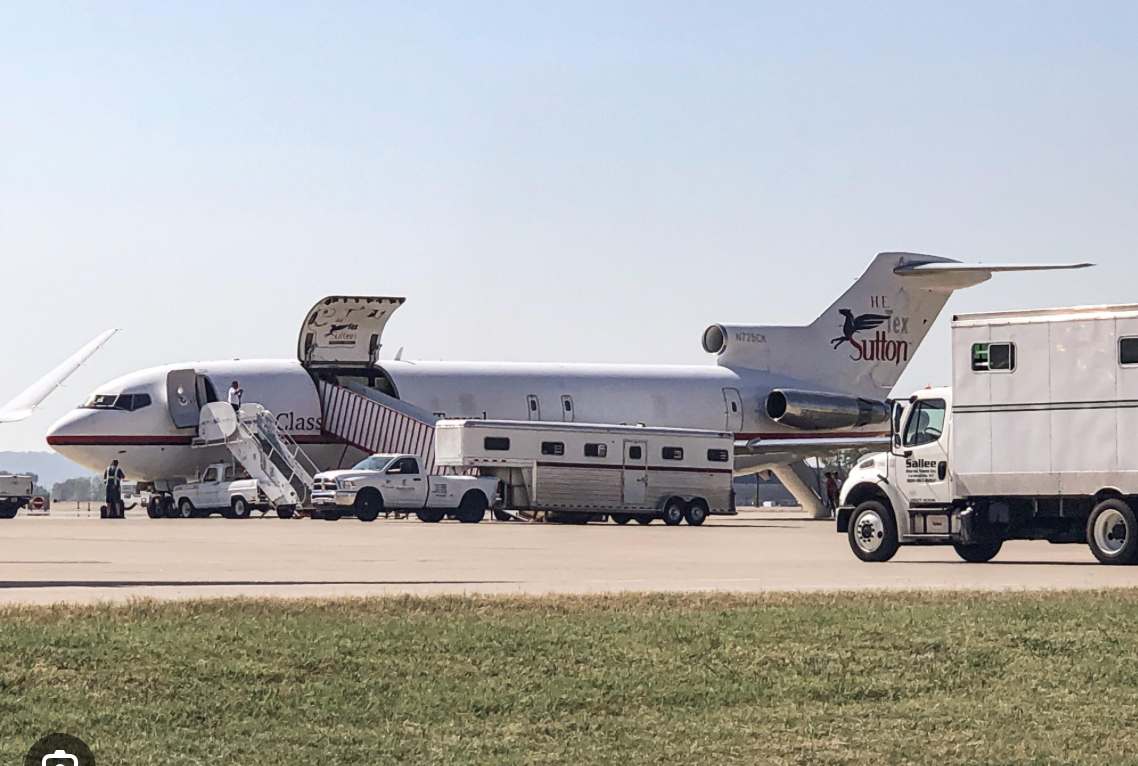
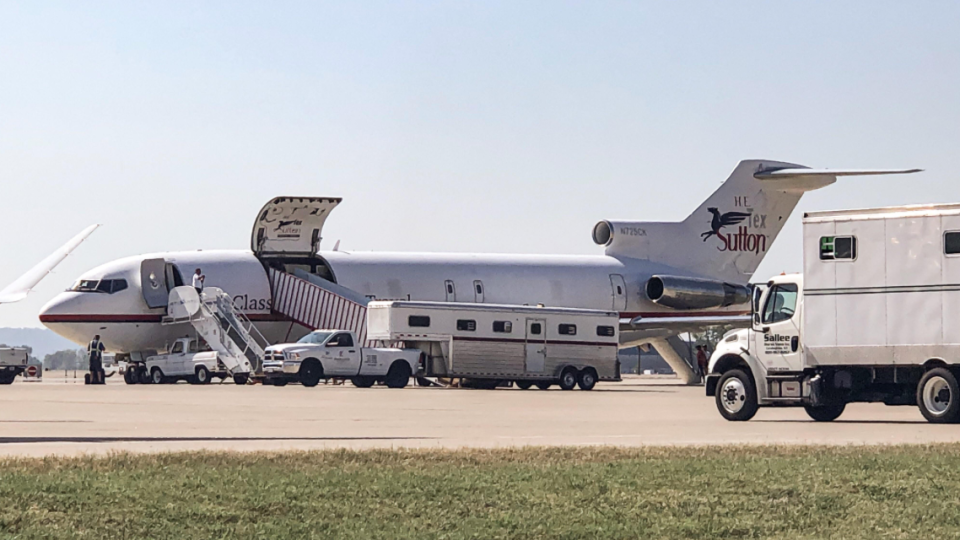
Long-distance exports are usually carried out by air, using cargo aircraft specifically adapted for horses.
This stage includes:
- Ground transport to the airport
- Loading into specially designed jet stalls
- Professional staff accompanying the horse
- Continuous attention to hydration, feeding, and comfort
The goal is always the same: for the horse to arrive calm, stable, and in excellent condition.
Arrival and post-import quarantine
Upon arrival in the destination country:
- The horse may enter a post-import quarantine
- Documentation is reviewed by local authorities
- Final veterinary inspections are carried out
Only after this final stage can the horse travel to its new stable and begin the adaptation period.
The importance of professional guidance
Exporting a dressage horse outside Europe is far more than logistics. It requires experience, anticipation, and a deep understanding of both horses and clients.
At Gallery Horse, we offer:
- Coordinate veterinarians and transport companies.
- Accompany our clients throughout the entire process
- Always prioritize the horse’s welfare
- Turn a complex operation into a smooth and secure experience
Because with top-level horses, excellence lies in the details.